Description
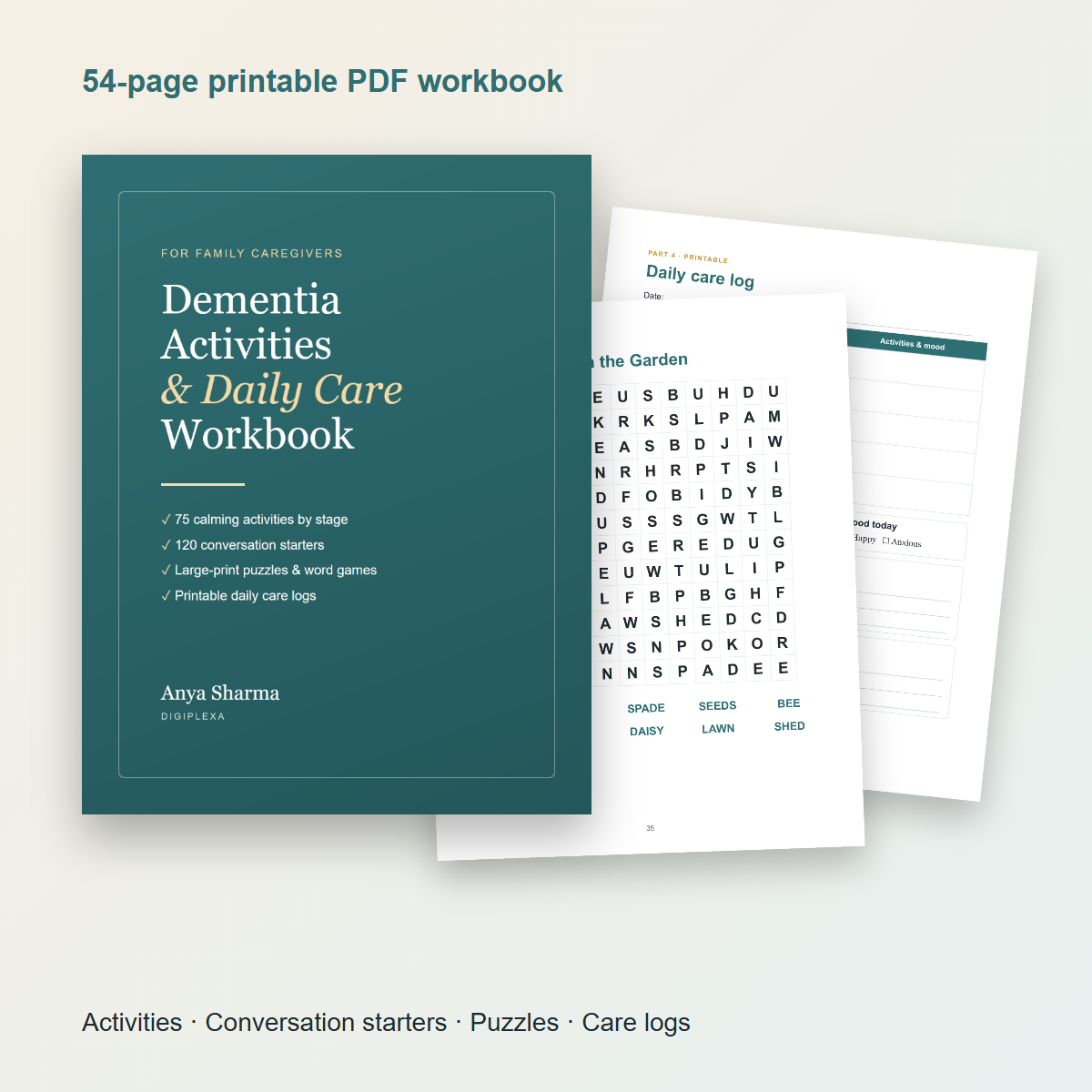
This dementia activities workbook gives family caregivers something calm and meaningful to reach for in the hardest moments of the day: the long afternoon, the same question asked again, the restlessness when there’s nothing to do. Every activity is matched to where your person is right now.
Written in plain, warm language for spouses, adult children and anyone caring for a family member at home.
What’s inside the dementia activities workbook
- 75 activities by stage: 25 each for early, middle and late stage dementia. Every activity lists what you need, how to do it one step at a time, and a practical tip.
- The 7 golden rules of activities: how to choose activities your person can succeed at, and what to do when they lose interest.
- 120 conversation starters in 8 themes (childhood, work, home, food, music, places, seasons, feelings), plus do’s and don’ts for easier conversations.
- Large-print activity pages: 6 word searches, 3 word scrambles, finish-the-saying and category games, with answers.
- Daily care pages to print: a calm daily routine example and planner, daily care log, weekly activity tracker, a “what helps & what upsets” page and an emergency information sheet.
- Looking after you: a respite plan and a list of free U.S. helplines and services, including the National Institute on Aging’s alzheimers.gov.
Who it’s for
Family caregivers looking for activities for dementia patients at home: things to do together that feel useful and enjoyable, not childish. It also works well for respite volunteers and visiting family who want to know what to do and talk about.
How to use it
- Read the 7 golden rules (two pages). They explain how to set up an activity so your person can succeed, and what to do if they lose interest.
- Find the stage that sounds most like your person: early, middle or late. Start there, and borrow from the stage before or after if it suits them better.
- Try one activity today. Tick the box, jot down how it went, and try another tomorrow. Over a week or two you’ll learn what reliably brings a good afternoon.
- Print the care pages and keep them where other family members and visiting caregivers can see what helps.
A peek inside: three of the 75 activities
- Early stage: make a “This Is My Life” book. Choose a theme such as school days or a first home, look through photos together and write short captions in their words, as statements rather than quiz questions.
- Middle stage: sort buttons by color. Tip large buttons onto a tray and sort them into a muffin tin. It’s calm, satisfying and easy to repeat (supervise if your person might put small items in their mouth).
- Late stage: share familiar scents. Hold lavender, coffee, orange or baking spices near them and talk gently about each one. Familiar smells can bring calm and memories.
Details
- 54 printable pages, US Letter (8.5 x 11 in); prints well on A4
- Large, clear type for older eyes
- Instant PDF download after purchase; print as many copies as your family needs
Download a free 6-page sample to see the activity cards, conversation starters, a care log and a word search before you buy.
This workbook is general information to support family caregivers, not medical advice. Follow the guidance of your person’s doctor and care team. Digital download only; nothing is shipped.
Questions
Which stage of dementia is this for?
All of them. Activities are grouped into early, middle and late stage, and the stage descriptions help you start in the right place. Many people enjoy activities from more than one stage.
What kinds of dementia activities are included?
A mix of four types, so you can match the activity to your person’s mood and energy: familiar household tasks (folding towels, sorting cutlery, wiping the table), reminiscence activities (photo books, memory boxes, music from their youth), gentle games and puzzles (cards, dominoes, large-print word searches) and sensory activities for later stages (soft fabrics, familiar scents, hand massage, nature sounds).
How long does each activity take?
Most dementia activities in the workbook take 10 to 30 minutes. Short and successful is better than long and frustrating, so stop while it’s still enjoyable and come back to it another day.
Can I use these dementia activities in a care home or day program?
The workbook is written for family caregivers at home, and the license covers printing for your own family and the people you personally care for. If you work in a care setting and want to use it with residents, email hello@digiplexa.store first.
Are the activities childish?
No. They are built around adult roles, past jobs, hobbies and everyday household tasks, so your person feels useful and respected.
Can I print pages more than once?
Yes. Print the care logs, trackers and puzzle pages as often as you need for your own family.
Is this medical advice?
No. It is a practical activity and organizing workbook. For medical questions, speak to your person’s doctor or care team, or call the Alzheimer’s Association 24/7 Helpline at 1-800-272-3900.
Reviews
There are no reviews yet.